
AFWERX SBIR/STTR Program Decreases Manpower Demand for Drone Operators
DAYTON, Ohio — On June 1, 2025, Ukrainian forces launched Operation Spiderweb, a coordinated drone attack targeting Russia’s long-range military aircraft at several airbases in Russian territory. According to public reporting, the complex operation involved launching 117 drones from wooden containers carried on flatbed trucks. Individual pilots, each using open-source software, guided their assigned drone to its target, damaging or destroying 40 aircraft, including bombers and a large transport plane. While effective, this approach required the Ukrainian military devoting one pilot per vehicle.
Command and control software developed by Autonodyne, a Boston, Massachusetts tech company, with support from AFWERX and the Department of Defense, turns the ‘one pilot, one drone’ approach on its head, expanding efficiency and lethality wielded by a warfighter.
Autonodyne’s software allows a single warfighter to simultaneously control multiple drones from different manufacturers, working with different datalinks, sensors and handheld devices.
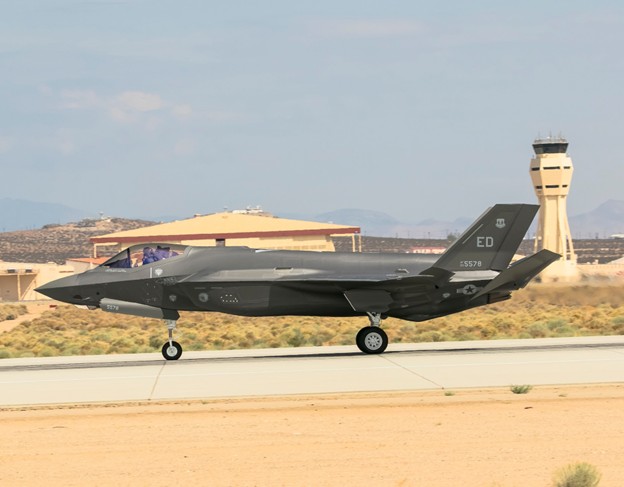
The company took this approach on purpose, said Steve “Jake” Jacobson, Autonodyne’s founder and chief executive officer.
“We are a software company,” Jacobson said. “We’re not an OEM maker. We’re not making vehicles. The world isn’t going to bend to our designs. Our designs have to support this universe of different combinations of protocol, datalinks and user devices, computer environments, all kinds of stuff.”
The software’s agnostic nature fosters private-sector competition and innovation by allowing the Department of the Air Force to work with various OEMs without being locked into a single platform.
The company’s technology also allows users to pair unmanned vehicles with crewed forces to plan and conduct successful missions. The software has also been used to conduct Red Team testing of drone defenses at U.S. military bases.
Autonodyne and AFWERX
Drones have been and will remain a critical piece of Air Force efforts to increase survivability and generate combat power by quickly deploying and operating from dispersed locations, rather than relying only on a few main bases.
Drones such as the MQ-9 Reaper and the Collaborative Combat Aircraft (CCA) align with this strategy by providing Intelligence, Surveillance and Reconnaissance (ISR), rapid deployment, Manned/Unmanned Teaming (MUM-T) and Counter (C-UAS) capabilities.
As part of the DAF’s efforts to gain a strategic edge with unmanned systems, Autonodyne began working with AFWERX in December 2019 when it received a Phase I contract. The agreement called for the company to look for ways to adapt its commercial common control station software, adding more autonomy behaviors that are optimized for Air Force Special Operations Command warfighters.
That work led to the company landing a Phase II SBIR worth nearly $3 million. The July 2021 contract called for Autonodyne to continue working with its common control station and autonomy behaviors, rapidly expanding the capabilities available to the Air Force, other military service branches and commercial users.
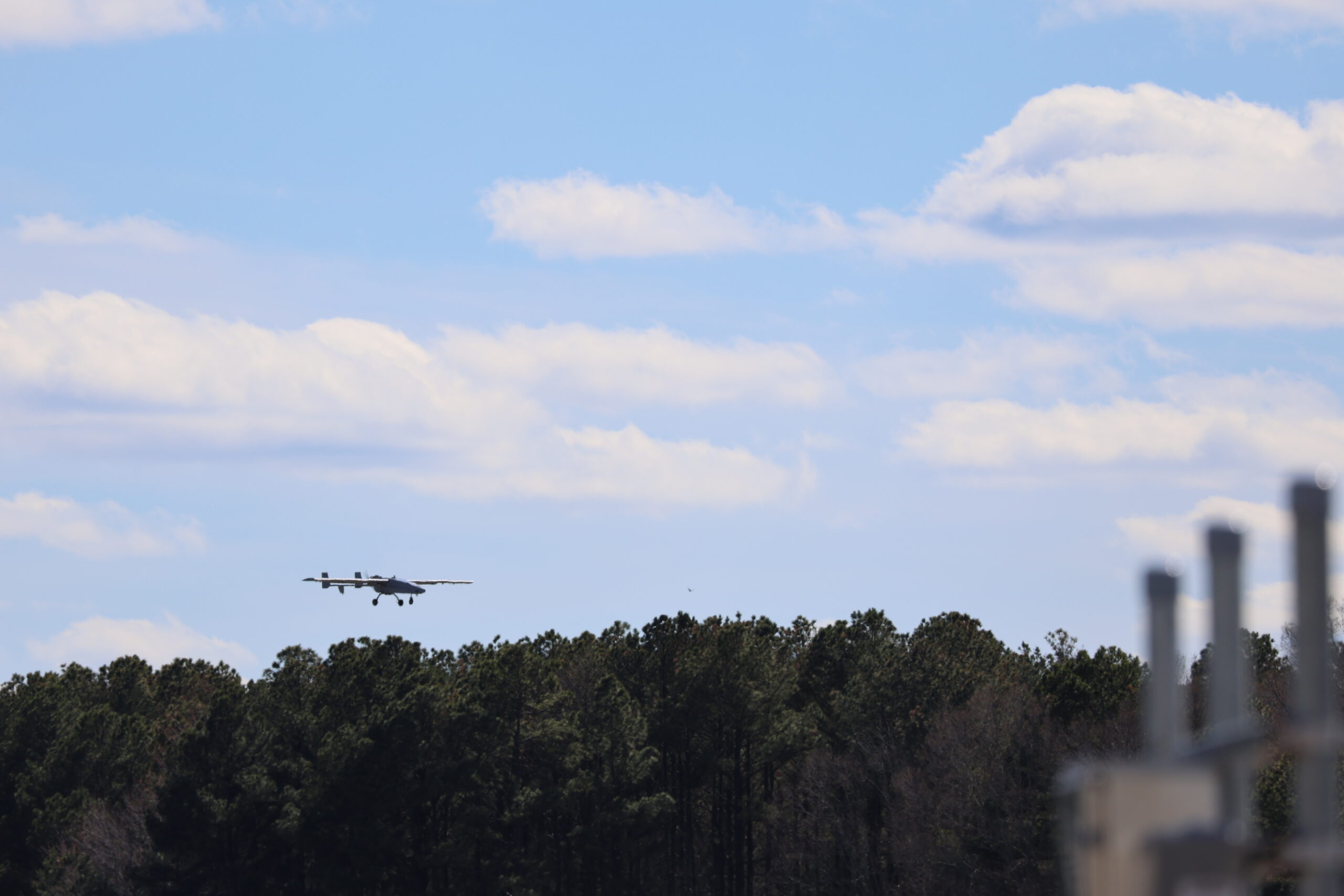
In February 2023, AFWERX awarded Autonodyne a $521,150 Phase III contract focused on using drone swarms to check military bases for vulnerabilities in their UAS defenses.
Several months later, in August 2023, the company received a $687,000 Phase III contract from Kessel Run, formally known as the Air Force Life Cycle Management Center (AFLCMC) Detachment 12. The contract from Kessel Run, a software development enterprise located in Boston and at Hanscom Air Force Base, Massachusetts, funded Project Free Flight, an effort focused on autonomous scouting.
The following year, in March 2024, AFWERX awarded Autonodyne a Phase III contract totaling $4 million to work on autonomous system integration and development as well as software development for human interfacing with the control systems.
Under the contract, Autonodyne developed a library of autonomy behaviors that could be accessed manually, or in more advanced scenarios, be automatically stitched together with a set of high-level automation tasks for real-time autonomous control of dynamic system behaviors.
In May, AFWERX awarded the company a $1.5 million Phase III contract, funded by the Advanced Aircraft Division, part of the AFLCMC Fighters and Advanced Aircraft Directorate. The agreement could reach $17.5 million. It calls for Autonodyne to deliver ‘software vehicle control integration and development’ to the division.
Autonodyne’s success demonstrates how AFWERX’s approach directly supports broader national priorities. By investing in a small, domestic business, AFWERX not only delivered a critical military capability but also bolstered the nation’s defense industrial base. The agnostic nature of the software promotes competition among U.S. manufacturers, preventing vendor lock-in and ensuring the DAF has access to the best technology on the market. This case study is a testament to the power of public-private partnerships, illustrating how targeted government investment can accelerate innovation, drive economic growth and strengthen the military to meet future challenges.
*Disclaimer: References to non-federal entities do not constitute or imply Department of War or Air Force endorsement of any company or organization.