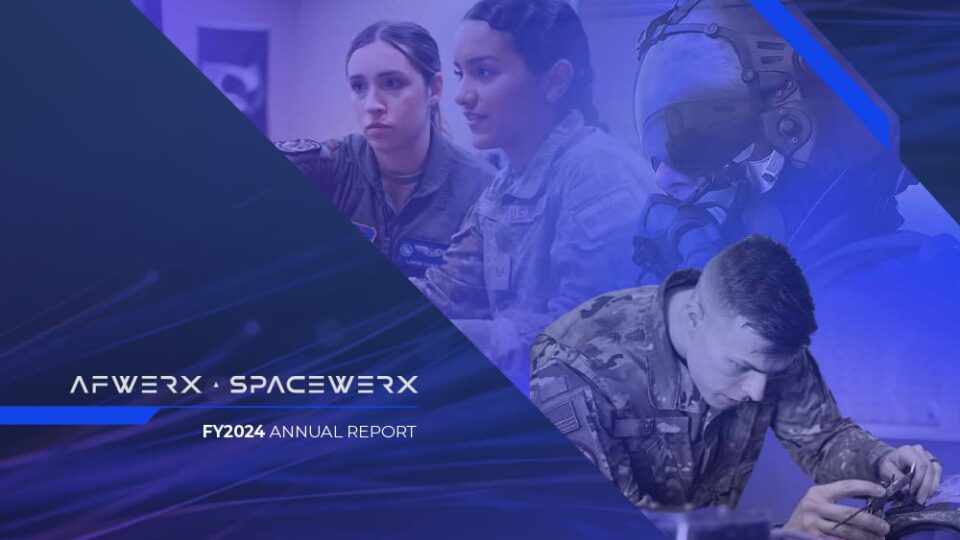
The Innovation Arm of the Department of the Air Force
AFWERX, the innovation arm of the Department of the Air Force (DAF) and powered by the Air Force Research Laboratory (AFRL), connects American Ingenuity with the DAF’s most pressing challenges. We cultivate and transition impactful emerging technologies to deter and win wars by empowering Airmen and Guardian talent and expanding the defense industrial base for advanced technologies.
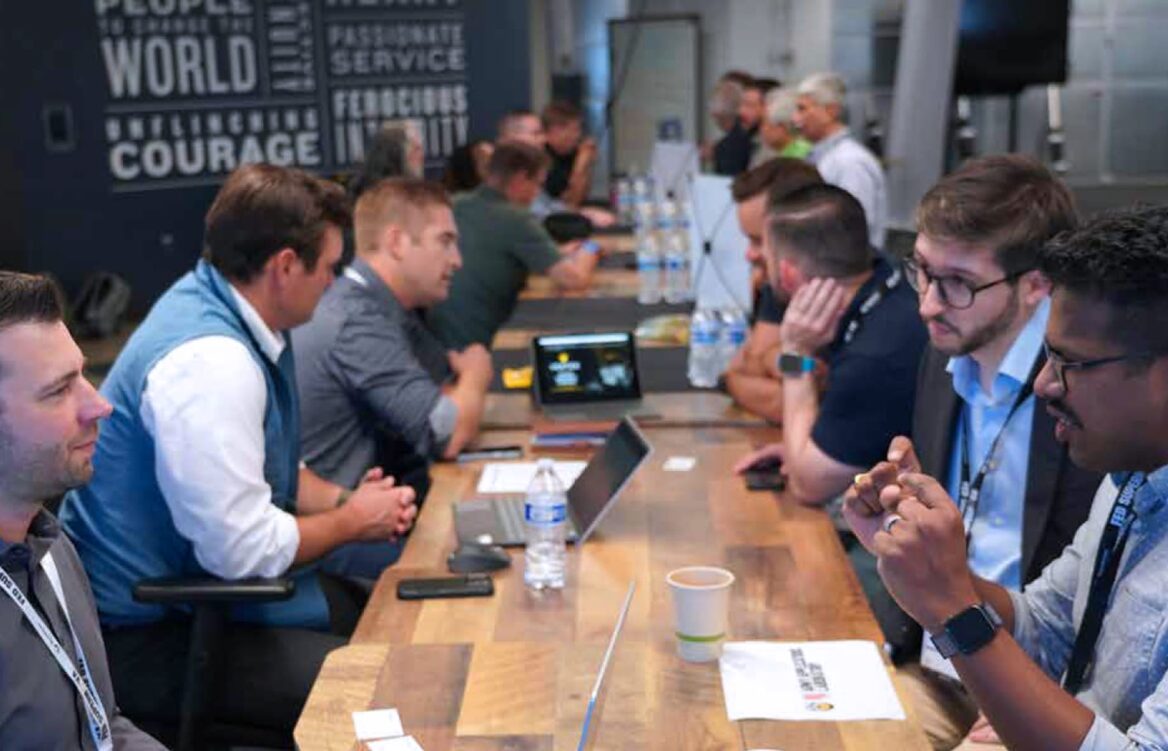
Our Core Mission
Mission
AFWERX accelerates agile and affordable capability transitions by teaming leaders in innovative technology with Airmen and Guardian talent.
Vision
Forge an innovation ecosystem that delivers disruptive Air and Space capabilities.
Mantra
Unleashing American Ingenuity


News & Success Stories
AFWERX, SpaceWERX Supports Development of AI Technology for Guardian Information Discovery
DAYTON, Ohio — Today’s military operations often require rapid access to information to support planning and decision-making. For U.S. Space Force analysts, locating relevant information across a vast number of sources and agencies can be time-consuming and may increase cognitive workload, potentially affecting mission planning and operational decisions.
As the volume and complexity of data continue to grow, identifying relevant information and synthesizing it into useful context has become an increasingly important operational challenge. Personnel supporting military operations often require timely access to information to assist with mission planning and execution.
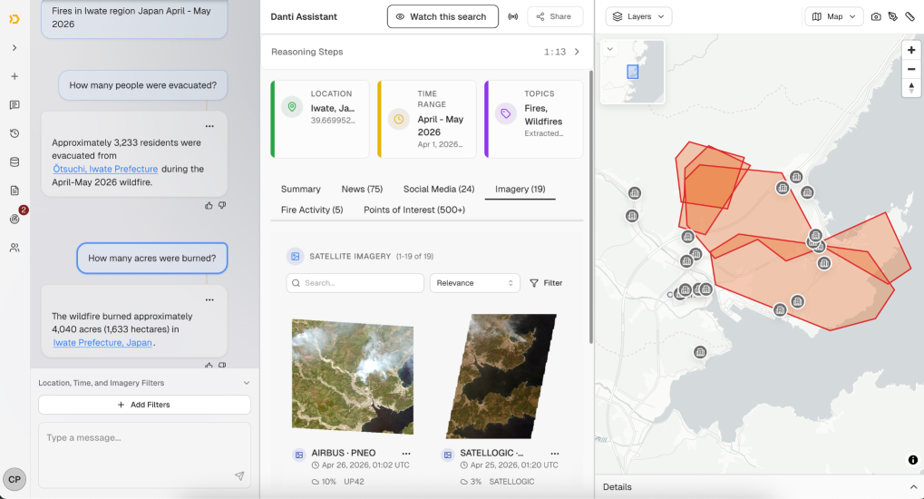
To support this effort, SpaceWERX awarded Danti a contract to accelerate the development and transition of an artificial intelligence-powered, agentic intelligence platform intended to help Guardians discover, organize and analyze mission-relevant information.
In 2023, SpaceWERX awarded Danti a Direct-to-Phase II contract to build, test and refine the technology for potential operational transition. In 2024, Danti received a Tactical Funding Increase (TACFI) award to further develop and scale the technology for commercial applications.
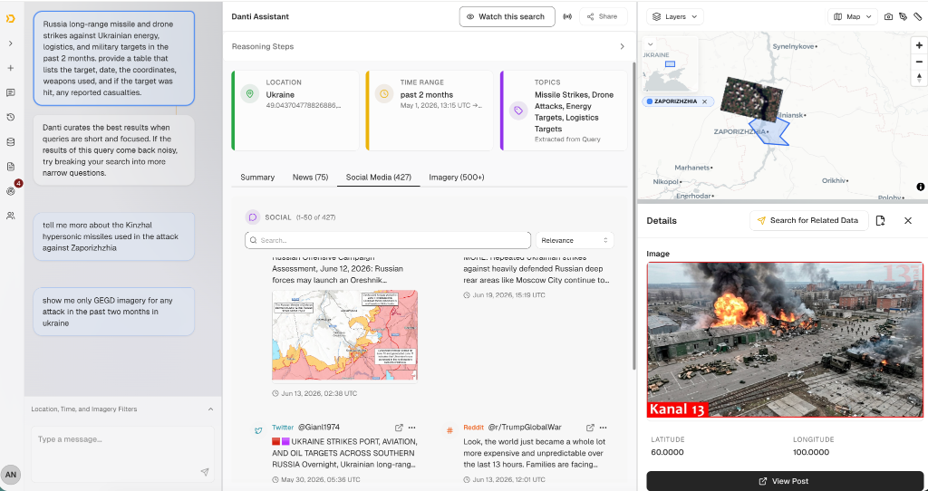
U.S. Special Operations Command Europe (SOCEUR) used the Danti platform during the Trojan Footprint 2026 exercise. Ground advisers used the platform to provide unclassified, space-enabled responses to critical requests for information from Georgian Special Operations Command (GSOC) operators executing tasks in the field.
According to Danti, the platform enables users to search data using natural language rather than complex search syntax. The technology is intended to interpret the context of a user’s question, automate search, retrieval and analysis tasks, and provides responses that include source attribution.
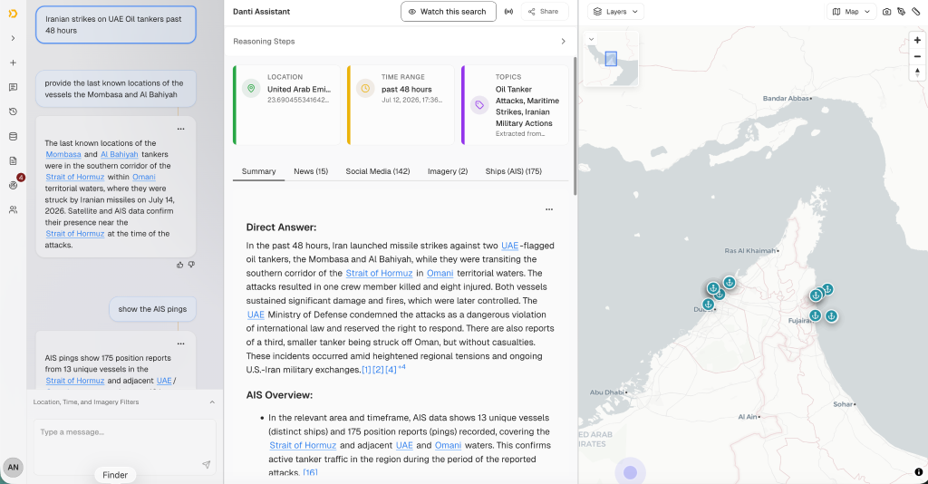
The platform is designed to integrate information from multiple data sources, including commercial providers and government agencies, into a single search experience. According to the company, this approach can help users locate geospatial information, imagery and other operational data more efficiently.
The platform is intended to reduce the time and expertise required to search across multiple datasets, allowing personnel to focus more on analysis and mission support. According to Danti, the technology can support workflows such as correlating space-based imagery and signals with publicly available news and social media content and automating portions of the reporting process.
The platform’s AI-enabled search and workflow capabilities are also designed to help users identify relationships among data that may be difficult to detect through manual search processes. Faster access to relevant information may support planning and decision-making in dynamic operational environments.
As the U.S. Space Force continues to modernize its digital capabilities, the service is evaluating technologies intended to improve data accessibility and operational efficiency. Through collaboration with commercial companies, the service can assess emerging technologies that address evolving operational needs.
This collaboration provides the Space Force an opportunity to evaluate how commercial AI technology may help Guardians transform large volumes of mission data into information that could support operational decision-making.
*Disclaimer: References to non-federal entities do not constitute or imply Department of War or Air Force endorsement of any company or organization.
AFWERX Supports Development of Modular Fuel Technology for Contested Environments
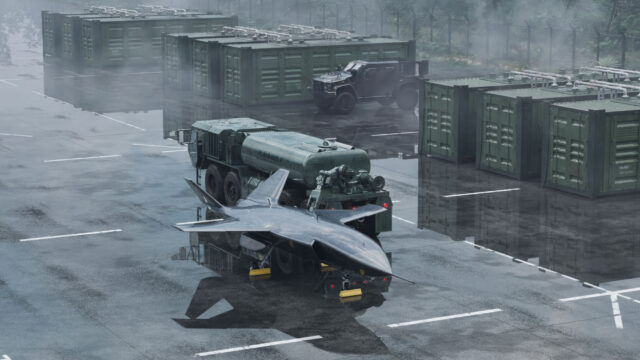
DAYTON, Ohio — Fuel distribution remains a significant logistical challenge for military operations in contested and remote environments. Conventional fuel supply chains often rely on transportation routes, large storage infrastructure and frequent resupply missions that can increase operational risk, limit mission endurance and place additional demands on personnel.
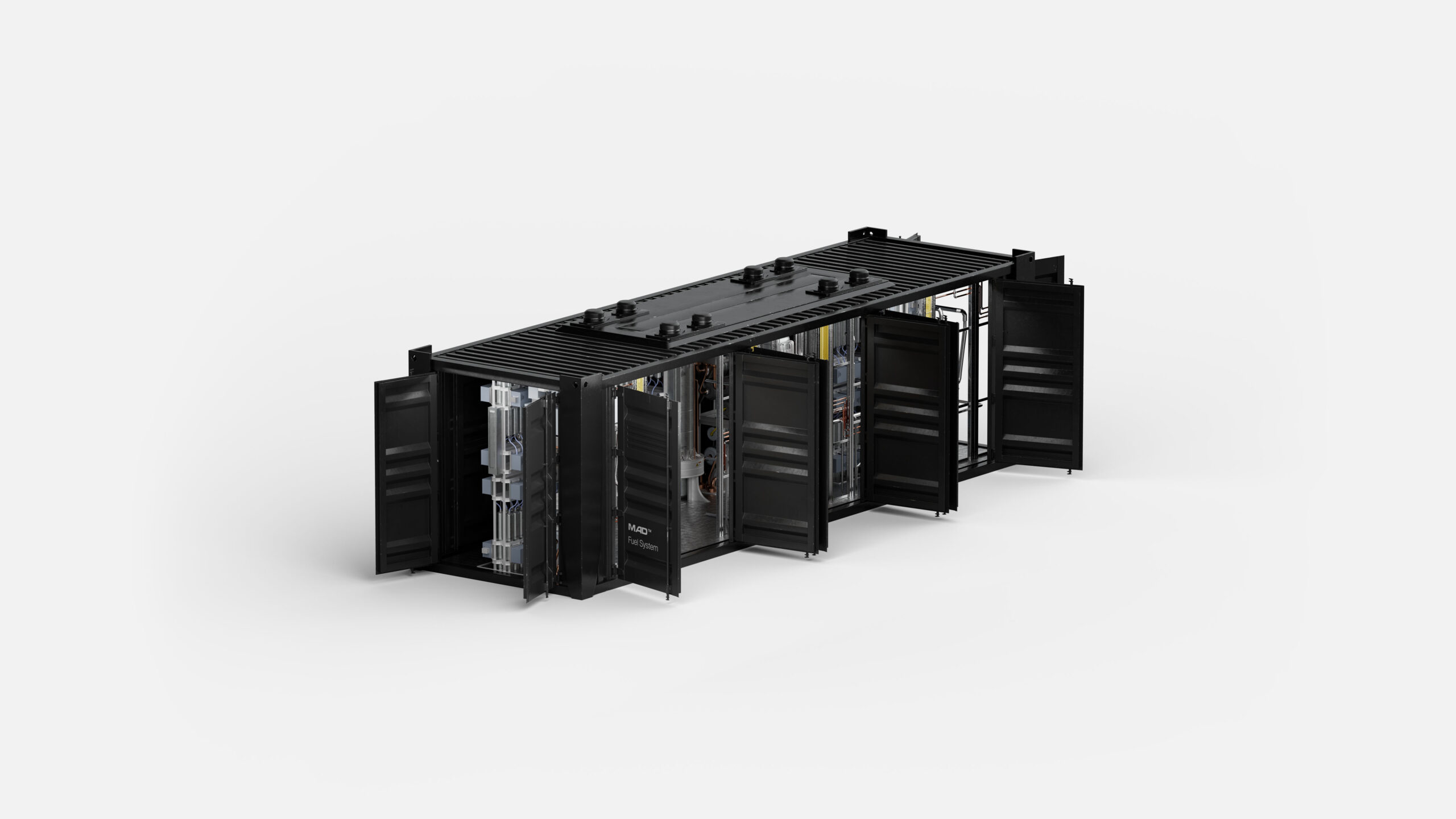
AFWERX awarded AIRCO, a carbon-conversion technology company, a $15 million Strategic Funding Increase (STRATFI) contract to continue development of its Mobile, Adaptable and Deployable (MAD) Fuel System.
AFWERX’s STRATFI award is part of the Small Business Innovation Research (SBIR) program, which provides funding to small businesses developing technologies with potential applications for the Department of the Air Force and the Department of Defense.
The technology is a containerized platform designed to produce synthetic jet fuel or diesel fuel at or near the point of use. According to the company, the system captures carbon dioxide and produces hydrogen from locally available sources, converting them into liquid hydrocarbon fuel.
The approach is intended to reduce reliance on traditional fuel delivery methods.
If development and testing are successful, the system could provide another option for fuel production during expeditionary operations. It could allow units operating in remote or dispersed locations to produce fuel closer to the point of use, rather than relying solely on fuel transported from established supply hubs.
The technology also is being considered in connection with Agile Combat Employment concepts, which emphasize the ability to operate from distributed locations.
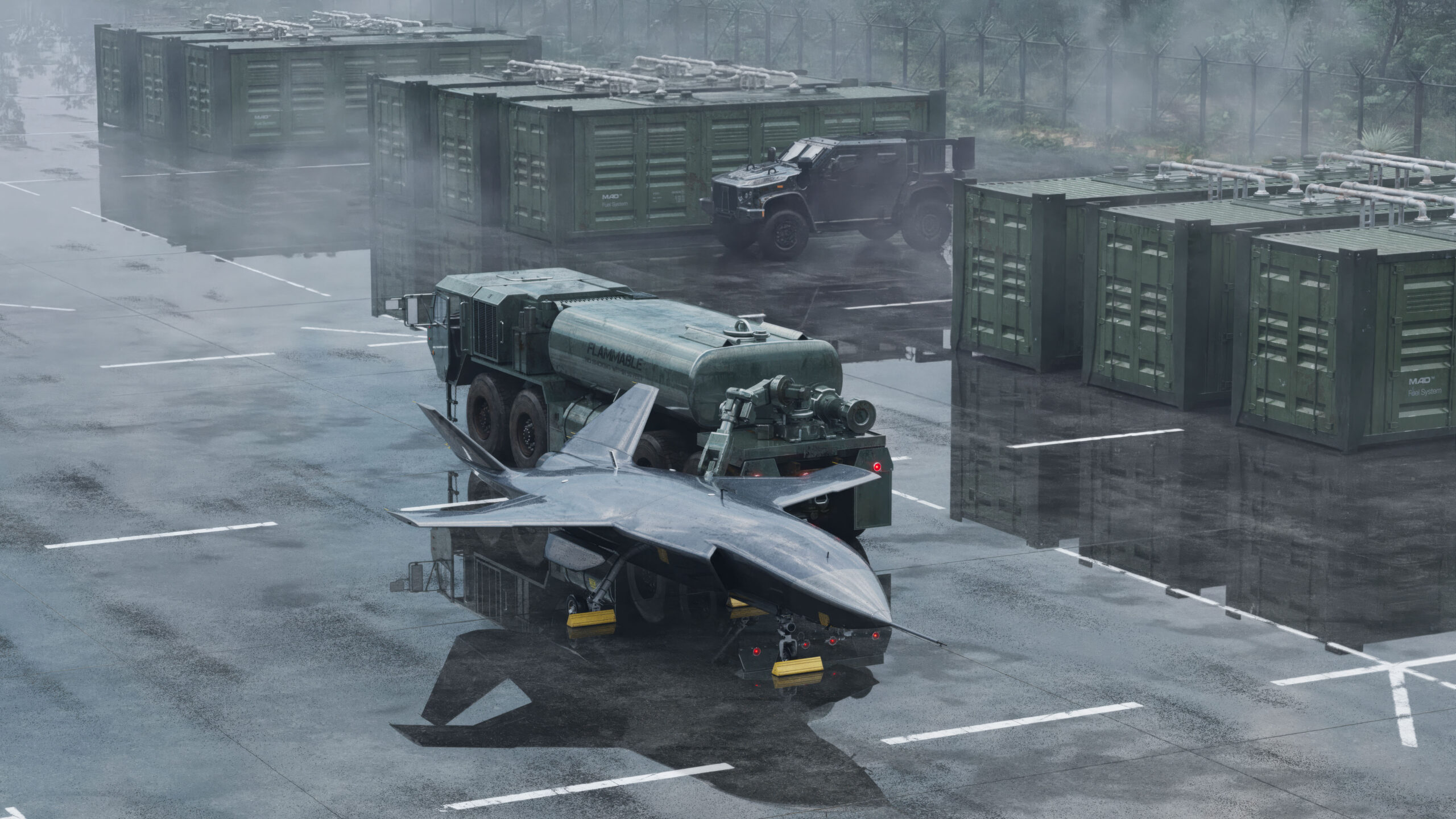
Other Department of Defense organizations involved in the continued development of the fuel system include the Defense Logistics Agency, the Air Force Petroleum Office and the 12th Air Task Force. Planned next steps include fuel qualification activities and support for AIRCO’s planned commercial demonstration plant.
Distributed logistics remains a key component of Department of the Air Force operational planning for contested environments. Technology could potentially increase operational flexibility and reduce logistical demands in austere locations.
AIRCO’s work demonstrates how AFWERX can help advance emerging technologies from development toward potential operational applications. Through collaboration with industry and investment in innovative solutions, AFWERX helps address technology challenges that could affect future warfighter capabilities.
*Disclaimer: References to non-federal entities do not constitute or imply Department of War or Air Force endorsement of any company or organization.
AFWERX SBIR/STTR Program Supports Faster Software Deployment
DAYTON, Ohio — Modernized software has the capability to transform existing military hardware into agile systems that bolster Department of the Air Force missions. However, commercial companies often encounter barriers within the acquisition process, limiting opportunities for software modernization and allowing capability gaps to persist.
Traditionally, Commercial Solutions Openings (CSOs) served as an alternative and specialized competitive pathway. CSOs were typically confined to specific agencies and used sparingly to seek rapid prototypes through Other Transaction Authority (OTA).
On March 6, 2025, Secretary of Defense Pete Hegseth underscored the importance of shifting the acquisition framework from a hardware-centric model to a software-centric approach. The initiative focuses on performance-based outcomes that deliver capabilities to the warfighter at speed and scale.
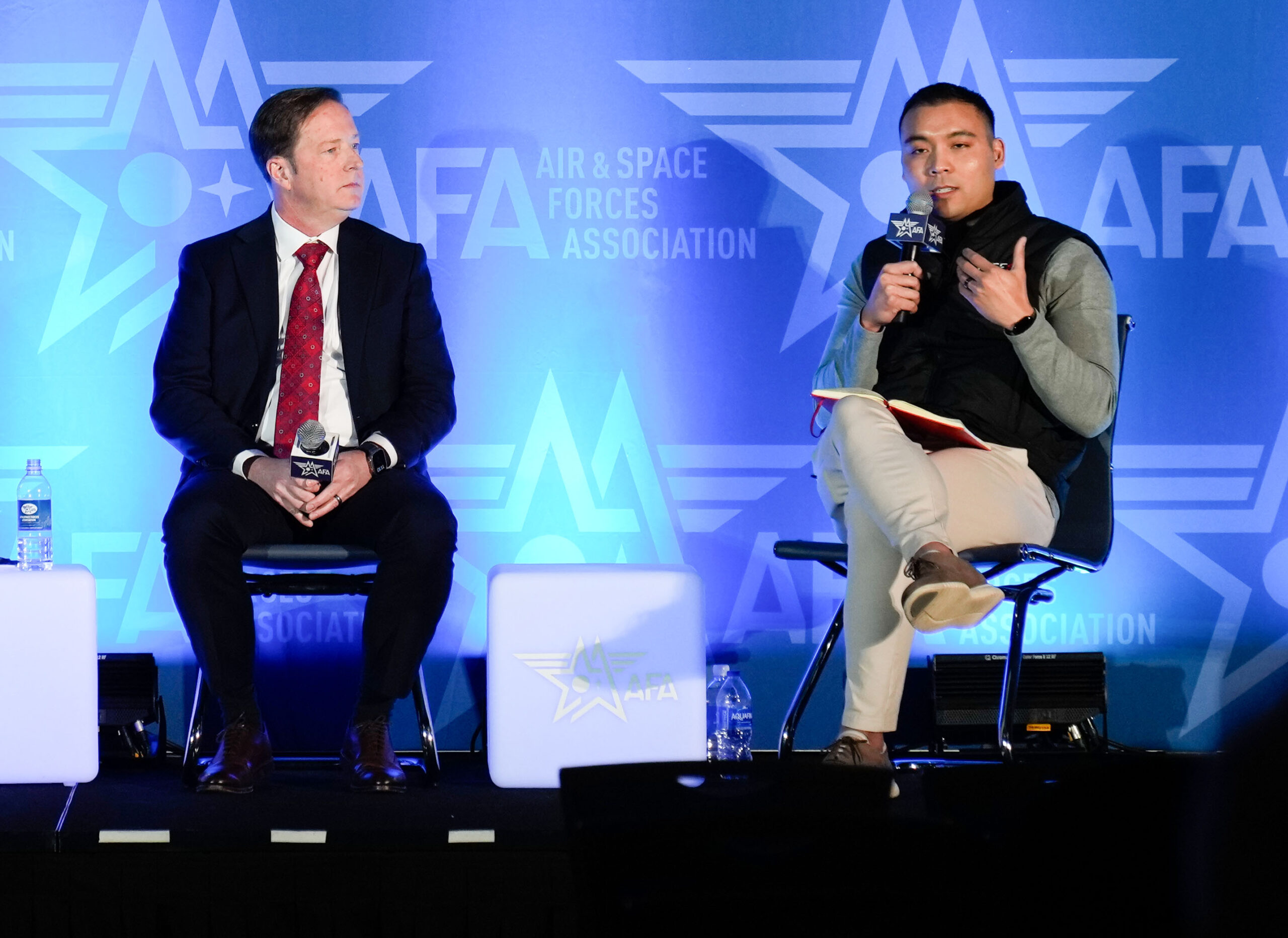
Innovation and prototype development remain a top priority for senior government leaders seeking to strengthen warfighter capabilities. Delivering those modernized advancements into operational use is the greatest barrier to mission capacity. Many technologies never progress beyond development because the software delivery process cannot keep pace with operational demands.
As threats continue to evolve across air, space, and cyber domains, streamlining access to emerging technologies will enable Airmen and Guardians to rapidly adapt, improve decision-making and maintain a competitive advantage against United States adversaries.
Rise8 Software Delivery Organization (SDO)
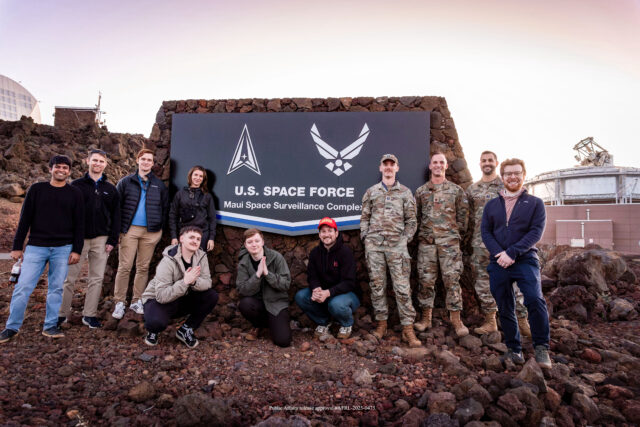
With support from AFWERX, Rise8, a Tampa, Florida-based digital transformation and software development firm, is supporting software delivery efforts focused on autonomy, software transition programs and other government initiatives.
Rise8’s AFWERX Software Delivery Organization (SDO) SBIR began with a Phase I award in November 2022. The efforts were geared toward validating how Rise8’s modern software delivery methods, DevSecOps practices, cloud-native engineering approach, and enablement model could be adapted for government.
In 2023, Rise8 worked with AFWERX Autonomy Prime to derive, extend and complete the proposal through a SBIR Phase III Indefinite Delivery/Indefinite Quantity contract (IDIQ) with an initial $100 million ceiling.
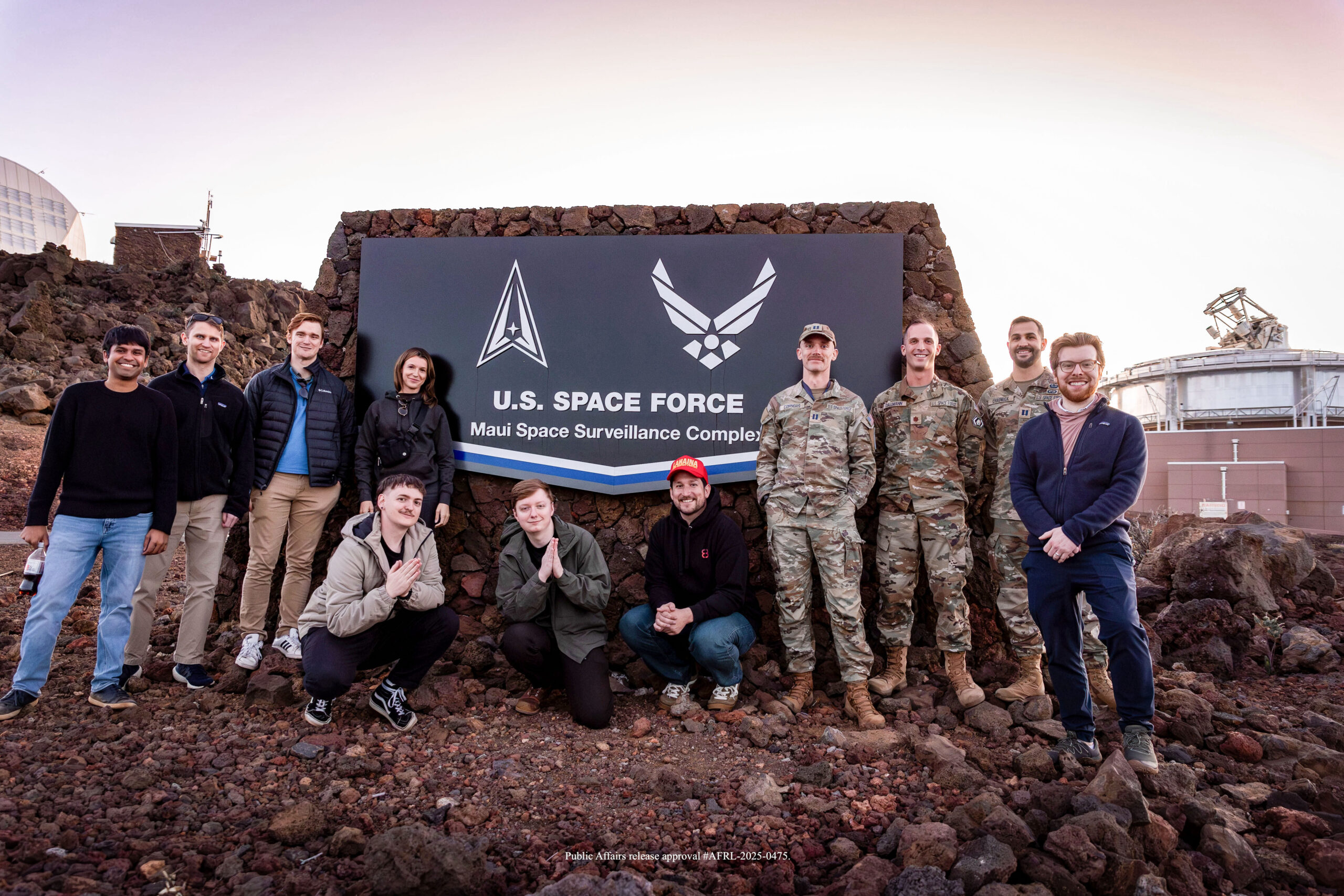
In 2024, Rise8 developed the Blitzar satellite communication resource request portal under an open topic, Direct-to-Phase II SBIR contract. Blitzar works across multiple spectrum bands and provides support to combatant commands globally, allowing their personnel to request satellite communications resources. Rise8 later received a Tactical Funding Increase (TACFI) to continue maturing the capability, and the effort ultimately transitioned into a Phase III task order under Rise8’s AFWERX SDO IDIQ.
In 2025, Rise8 secured an increase from $100 million to $499 million for the AFWERX SDO Indefinite Delivery Indefinite Quantity (IDIQ) contract vehicle. Rather than waiting months or years for major software releases, program managers can deploy incremental updates based on operational feedback and changing mission requirements. The SDO contract vehicle helps transition prototypes into production software through funded task orders and interactive software delivery. Organizations that have issued task orders through the IDIQ include:
- United States Air Force Kessel Run
- United States Air Force Unified Platform
- United States Air Force 309th Software Engineering Group
- United States Air Force AFWERX
- United States Space Force System Delta 84 Future Operationally Resilient Ground Evolution
- United States Space Force System Delta 88 Enterprise Management and Control
- United States Space Force Combat Forces Command Space Operations Command/Combat Force Enhancement
- United States Space Force Mission Delta 2 15th Space Surveillance Squadron
- United States Space Force Space Launch Delta 45
- Department of Veteran Affairs OIT Lighthouse
The collaboration between AFWERX and Rise8 illustrates one approach to transitioning software capabilities from prototype development into operational use. This partnership has guided ideas across the “valley of death” and into operational impact. Both organizations recognized that one of the biggest barriers to DoW software innovation is not a lack of ideas. It’s the inability to deliver software into production at speed and scale.
Rise8 is currently working on refining the vehicle to ensure it remains useful to the government. Future work under the contract is expected to support government efforts related to responsible artificial intelligence adoption, enablement, and implementation.
*Disclaimer: References to non-federal entities do not constitute or imply Department of War or Air Force endorsement of any company or organization.